
Quick Answer: Can you be a surrogate if you had gestational diabetes? Often, yes. A history of gestational diabetes does not automatically disqualify you at most surrogacy agencies, including ours. Approval depends on how your blood sugar got managed, how your pregnancy and delivery ended, and what the fertility clinic finds during medical screening. Cases …
Quick Answer: Can you be a surrogate if you had gestational diabetes?
Often, yes. A history of gestational diabetes does not automatically disqualify you at most surrogacy agencies, including ours. Approval depends on how your blood sugar got managed, how your pregnancy and delivery ended, and what the fertility clinic finds during medical screening. Cases controlled through diet and exercise generally receive a warmer review than cases that required medication, and the final call always rests with the clinic after a full look at your surrogate requirements and records.
What You Should Know About Surrogacy After Gestational Diabetes
Does diet and exercise control change my chances?
- Yes, meaningfully. Clinics distinguish between gestational diabetes managed through diet and exercise and cases that needed medication, a split doctors formally classify as A1 and A2.
- A diet-controlled history with a full-term delivery reads as a managed bump, not a red flag.
- Insulin or medication use during pregnancy usually prompts a much closer review, and many programs decline those cases.
Will a glucose test happen during medical screening?
- Expect thorough lab work. American Society for Reproductive Medicine (ASRM) guidelines call for a complete medical evaluation of every gestational carrier before acceptance.
- Your OB records will show exactly how your glucose test results looked in past pregnancies.
- During a surrogate pregnancy, you would receive glucose screening again, since the Centers for Disease Control and Prevention (CDC) notes that testing typically happens between 24 and 28 weeks.
Does gestational diabetes mean I will develop type 2 diabetes?
- Not necessarily, though the risk is real. The CDC reports that about half of women with gestational diabetes go on to develop type 2 diabetes.
- Healthy habits after delivery lower that risk, and your doctor can guide you on follow-up testing.
- A current type 1 or type 2 diagnosis differs completely from a past gestational case, and it does disqualify surrogate candidates.
Can you be a surrogate if you had gestational diabetes? We hear this question often at Creative Love, usually from a mom who managed her blood sugar beautifully, delivered a healthy baby, and now wonders if that one chapter closed the door on helping another family. Take a breath, because the answer holds far more hope than you might fear.
8.3%
U.S. births with gestational diabetes in 2021, per CDC data
41%
Recurrence in a second pregnancy, per a Kaiser Permanente study
50%
Share who later develop type 2 diabetes, per the CDC
24 to 28
Weeks of pregnancy when glucose testing happens
Table of Contents
- Can You Be a Surrogate If You Had Gestational Diabetes? The Honest Answer
- What Gestational Diabetes Does to Blood Sugar During Pregnancy
- Why Insulin Resistance Matters to Your Fertility Clinic
- How Medical Screening Reviews a History of Gestational Diabetes
- The Risk in a Subsequent Pregnancy and How Clinics Weigh It
- Gestational Surrogate Requirements and Health Requirements Beyond Blood Sugar
- Building a Healthy Pregnancy Plan After Gestational Diabetes
- How Creative Love Supports Gestational Surrogacy Candidates After Gestational Diabetes
- Frequently Asked Questions
Can You Be a Surrogate If You Had Gestational Diabetes? The Honest Answer

In many cases, yes, you can still become a surrogate after gestational diabetes. Most surrogacy agencies and fertility clinics treat a past diagnosis as a yellow light rather than a red one. They slow down, review your records carefully, and then decide based on how your story actually unfolded.
Three questions shape nearly every gestational surrogacy decision. Did diet and exercise alone control your blood sugar, or did medication enter the picture? Did your pregnancy reach full term without other pregnancy complications?
The third question matters just as much. Have your levels returned to normal since you last gave birth? Strong answers to all three put potential surrogates in a genuinely good position.
- A diet-controlled case with a healthy, full-term delivery often clears review at agencies across the country.
- A case that required insulin or oral medication faces steeper odds, and many programs decline those applications for safety.
- Every application is decided on a case-by-case basis, so an honest conversation beats guessing yourself out of the running.
What Gestational Diabetes Does to Blood Sugar During Pregnancy
Understanding the condition helps the screening process feel less personal. Gestational diabetes develops during pregnancy in women who never had diabetes before, and according to the CDC, it affects 5 to 9% of U.S. pregnancies every year. CDC birth data shows the rate reached 8.3% of births in 2021, climbing steadily with maternal age.
During pregnancy, your body produces hormones that help the baby grow. Those same hormones make your cells respond less efficiently to insulin, the hormone that moves sugar out of your blood and into your cells for energy. When your pancreas cannot keep up, blood sugar levels rise, and doctors diagnose gestational diabetes, usually after a glucose test between 24 and 28 weeks.
- The condition often causes no symptoms at all, which explains why testing happens for every pregnancy.
- Unmanaged high blood sugar raises the chance of a very large baby, premature birth, high blood pressure, and a C-section, per CDC guidance.
- Managed well, many women with the condition go on to deliver healthy babies. If you did exactly that, you already proved something important about your diligence as a future surrogate mother.
Why Insulin Resistance Matters to Your Fertility Clinic
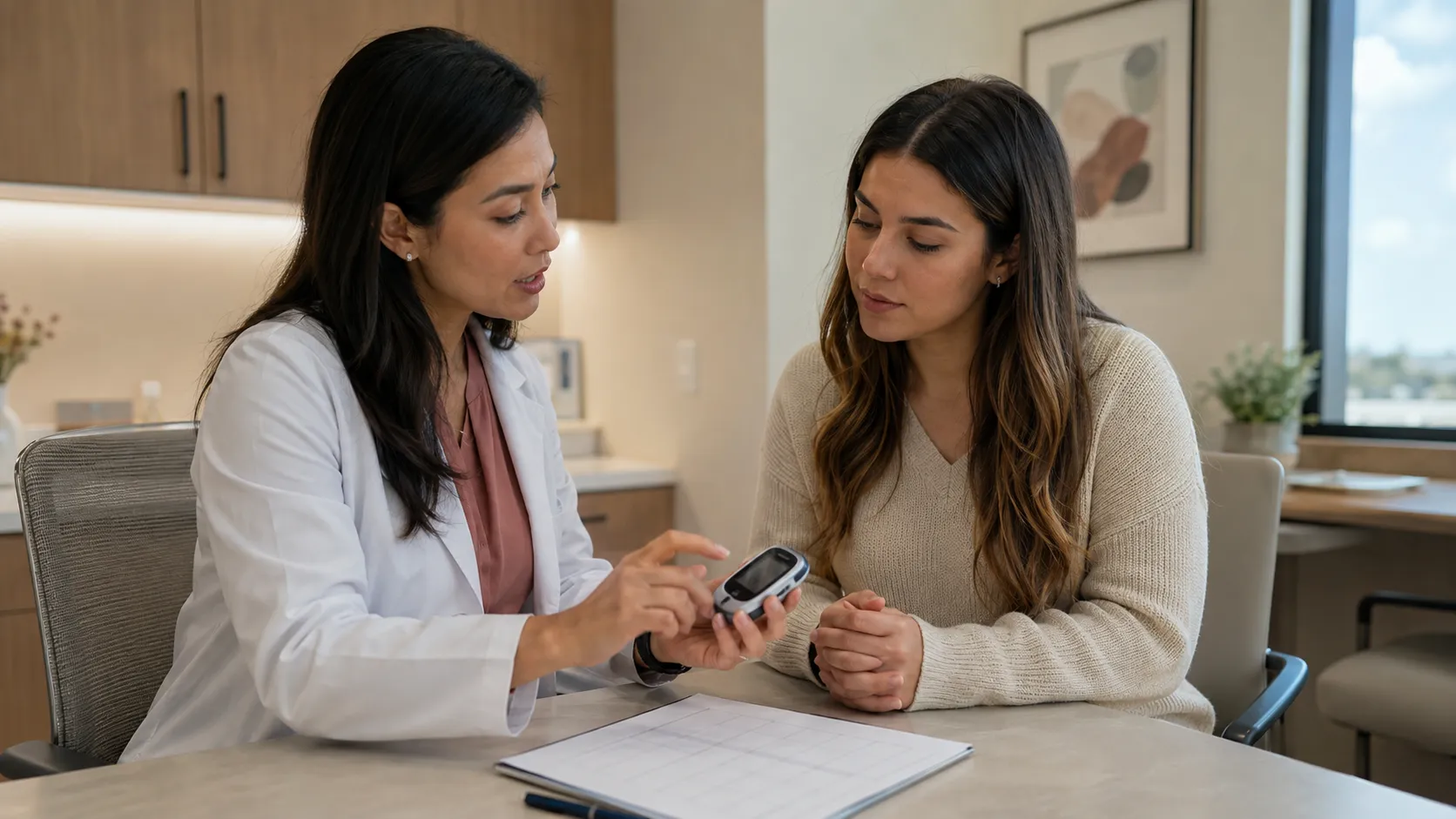
Here comes the piece most applicants never hear explained. Your fertility clinic cares about insulin resistance, which is the reduced response to insulin behind gestational diabetes, because a surrogate pregnancy adds its own hormonal layer. The medications that prepare your body for an embryo transfer shift your hormone balance before the pregnancy even begins.
The reproductive endocrinologist, the doctor who oversees your cycle, wants confidence that your body can handle those medications plus nine months of pregnancy without your blood sugar spiraling. A history of well-managed gestational diabetes tells the doctor you know how to monitor, adjust, and follow a plan. That counts for more than applicants expect.
Good to Know: Doctors label diet-controlled gestational diabetes as class A1 and medication-controlled cases as class A2. Knowing which class appeared in your chart before you apply helps you have a faster, clearer screening conversation.
How Medical Screening Reviews a History of Gestational Diabetes
Every surrogate candidate completes the same thorough screening process, and a gestational diabetes history simply adds a few extra pages to the review. ASRM guidelines recommend a complete medical evaluation, lab testing, and preconception counseling for every gestational carrier before acceptance.
With a gestational diabetes history, expect the review to focus on a few things in particular. None of them should scare you, because each one exists to protect you as much as the baby.
- Your medical records from the past 7 years, showing when the diagnosis appeared and the care plan your doctors followed.
- Whether diet and exercise alone kept your numbers in range, or whether medication entered the picture.
- Your delivery outcome, since a full-term birth without complications carries real weight, in line with the ASRM preference for at least one term, uncomplicated pregnancy.
- Current lab work confirming your blood sugar returned to normal after delivery.
- Your weight today, because our surrogate requirements call for a BMI under 32, and a healthy weight lowers recurrence risk.
Pro Tip: Request your full OB chart before applying, not just the delivery summary. Screening teams want to see your glucose test numbers and management notes, and having them ready can shave weeks off your review.
The Risk in a Subsequent Pregnancy and How Clinics Weigh It

Clinics look closely at recurrence because the numbers deserve respect. A large Kaiser Permanente study found gestational diabetes returned in about 41% of second pregnancies among women who had it before. In other words, a subsequent pregnancy carries a meaningful chance of a repeat, and everyone involved deserves to plan for that honestly.
A repeat does not doom a surrogacy journey. It means your care team watches earlier, tests sooner, and manages proactively from the first trimester. What clinics want to avoid is a surrogate blindsided by a condition no one prepared her for, carrying a baby for a family with everything on the line.
- Intended parents receive full transparency about your history during matching, and many families feel completely comfortable moving forward with a well-managed candidate.
- Your surrogacy contract can spell out monitoring plans, so all parties involved share the same expectations.
- If a repeat develops during a surrogate pregnancy, your medical team manages it the same way they would any pregnancy, with diet, monitoring, and medication only if truly needed.
“Our journey had a few bumps along the way, but Creative Love handled everything quickly and professionally.”
Tim and Steve, Intended Parents with Creative Love
Gestational Surrogate Requirements and Health Requirements Beyond Blood Sugar
A clean glucose history alone never qualifies anyone, and a complicated one alone rarely disqualifies. The full picture of our surrogate qualifications still applies to every applicant, at every age, with every medical history.
- An age limit of 21 to 40, having given birth to at least one child at full term without complications, and currently raising a child of your own.
- A BMI under 32 and no more than 5 total pregnancies, with C-sections capped at 2, or 3 with clearance from your OB.
- No smoking for at least 2 years, no illegal drugs, and a willingness to skip alcohol through the whole process.
- Residence in a surrogacy-friendly state as a U.S. citizen or legal resident, plus a stable home you do not plan to leave before delivery.
- A clean background check for you and your partner, financial stability, and no government assistance.
- A current type 1 or type 2 diabetes diagnosis ends eligibility, since ongoing diabetes poses serious risks to both you and the baby.
Wondering how your whole picture stacks up? Our post on things to consider before becoming a surrogate walks through the bigger decision in plain language.
Building a Healthy Pregnancy Plan After Gestational Diabetes

Whether you apply next month or next year, the habits that support a healthy pregnancy also strengthen your application. The CDC recommends reaching a healthy weight before pregnancy, staying active, and eating balanced meals to lower the risk of gestational diabetes. Those same steps protect you from the type 2 diabetes that follows in about half of gestational cases.
- Build meals around high-fiber, low-fat foods with plenty of vegetables, and keep portions sensible.
- Aim for regular movement most days, and our fitness tips for surrogate moms offer easy starting points.
- Keep up your postpartum glucose checks with your own doctor, and ask about the testing schedule that fits your history.
- Talk with your OB about pregnancy spacing and birth control while you plan your timing, since full recovery between pregnancies protects your health.
- For day-to-day eating ideas, our guide to diet and nutrition for surrogate mothers covers what a pregnancy-friendly plate looks like.
Watch Out: Nothing in this post replaces guidance from your own doctor. Before you change your diet, exercise, or any medication, talk with the medical team that knows your history. Bring your surrogacy questions to them too, and you will walk into screening informed and confident.
How Creative Love Supports Gestational Surrogacy Candidates After Gestational Diabetes

If your history includes gestational diabetes, please do not screen yourself out before we ever meet. Our surrogacy professionals have spent 20 years walking women through honest eligibility conversations, and we would much rather review your records with you than let a wonderful surrogate candidate disappear over a manageable chapter of her past.
As a full-service surrogacy agency, we coordinate your entire journey under one roof, from your first call through delivery day. We review medical histories together with our partner fertility clinics, so you get a real medical answer instead of a form letter. Our home in Florida, one of the most surrogate-friendly states in the country, wraps every match in strong legal protection through our surrogacy legal process, and we proudly serve families through our LGBTQ surrogacy program and international surrogacy program.
Surrogates in our program receive dedicated coordinators, clear answers about pay on our surrogate compensation page, and a team that treats your health as the top priority from screening through recovery. Call us at 954-776-9878 for a judgment-free conversation about your history, or start your surrogate application whenever you feel ready.
“Creative Love made what felt impossible finally feel real. Wendy guided us through every step with kindness, patience, and genuine care.”
Tehani, Intended Parent with Creative Love
Keep learning at your own pace with these resources. Women weighing the leap can read about becoming a gestational surrogate, review the surrogacy process, browse the surrogate FAQ, or review the most common surrogate medications. Intended parents can visit our surrogacy program, compare surrogacy types, review fees and costs, or begin the intended parents’ application.
You can also learn more about us, meet our team, hear real stories on our testimonials page, or see why families choose surrogacy in Florida. If egg donation calls to you instead, explore our egg donor program, egg donor process, and egg donor requirements. Whenever you want a human answer, the surrogate application form and our contact page stay open around the clock.
Frequently Asked Questions
Can you be a surrogate if you had gestational diabetes with Creative Love?
Often, yes. We review every gestational diabetes history individually with our partner fertility clinics rather than applying a blanket rule. Diet-controlled cases with healthy, full-term deliveries stand the strongest chance. Send us your records, and we will give you an honest answer, usually within days rather than weeks.
Does diet-controlled gestational diabetes count as an uncomplicated pregnancy?
Clinics treat it as a managed condition rather than an automatic complication. What matters most is that your numbers stayed in range, your baby arrived at full term, and your delivery went smoothly. The reviewing doctor reads your whole chart in context. Many women with a diet-controlled history move through the screening process successfully.
What if I needed insulin or medication for my gestational diabetes?
Medication-managed cases face a harder path, and many surrogacy agencies decline them out of caution for your health. The concern centers on how your body might respond to another pregnancy layered on fertility medications. We still encourage you to ask rather than assume, because the clinic weighs your full history, not a single line in your chart.
Will I get tested for gestational diabetes again as a surrogate?
Yes. Every surrogate pregnancy includes glucose screening, typically between 24 and 28 weeks, per CDC guidance. With a prior history, your care team may test earlier and monitor more often. That extra attention protects your well-being, catching any change while it stays small and manageable.
Does type 1 or type 2 diabetes automatically disqualify potential surrogates?
Yes. A current diagnosis of type 1 or type 2 diabetes disqualifies surrogate candidates at our agency and across the industry because ongoing diabetes carries serious risks for both you and the baby. Past gestational diabetes that fully resolved after delivery sits in a completely different category. Your current lab work tells the deciding story.
How can I lower my risk before becoming a surrogate?
Becoming a surrogate starts with the basics your doctor already recommends. Reach a healthy weight, move your body most days, build meals around fiber-rich foods, and keep up your postpartum glucose checks. The CDC ties these habits to lower gestational diabetes risk. They also strengthen every other part of your application.
My last baby weighed over 9 pounds. Does that affect my application?
It draws a closer look, since a very large baby often signals that blood sugar ran high during that pregnancy, per CDC risk factors. On its own, one big, healthy baby rarely closes the door. Your delivery records and current labs give the screening team the context they need.
Who makes the final decision about my eligibility after gestational diabetes?
The fertility clinic and its reproductive endocrinologist make the final medical call after our team reviews your history and records with you first. That layered review protects you, the baby, and the intended parents counting on a safe journey. Reach out, and we will start that conversation together, beginning with the question you came here asking: Can you be a surrogate if you had gestational diabetes?
One Diagnosis Doesn’t Define Your Ability to Give This Gift
Bring us your real history and your real questions. We will give you a straight, kind answer about your path forward, with zero pressure either way.

Wendy Arker entered the field of infertility with a huge heart and passion to guild others on their quest to grow their own family after her personal journey with infertility and turning to egg donation and sperm donation to create her own family. Being a single-mother-by-choice, Wendy understands firsthand the unique way families are built. Whether you’re a married couple, single, or LBGTQ, Creative Love is committed to assisting you.

